Our objection, point by point
The legal case against Segment 10
Our objection rests on Wisconsin statutes and the PSC's own rules. Each point below links to its source.
We support a reliable grid. MGS says BECI is designed to strengthen the power grid and improve reliability, as part of a regional plan MISO approved, and we do not dispute that need. Our question is where the line goes. We oppose routing it through Bear Valley against Wisconsin's siting priorities.
We are not asking that the line be put on anyone else's land. We ask that every community get the corridor-first comparison state policy calls for.
This page is general information, not legal advice. BVCC is not a law firm. Talk to your own attorney about your property.
Wisconsin's siting policy puts existing corridors first
Wis. Stat. § 1.12(6) sets state policy that, to the greatest extent feasible consistent with economic and engineering considerations, reliability, and protection of the environment, new lines should use existing utility corridors first, then highway and railroad corridors, then recreational trails, and new corridors last.
MGS has said its preferred route through Crawford, Richland and Sauk counties will not follow existing transmission easements. Our comparison of the 78 published study segments with the state's map of existing transmission lines found no segment that follows an existing transmission corridor.
PSC rules require every application to show how these priorities were considered (Wis. Admin. Code § PSC 111.55(10)(q)).
Sources: Wis. Stat. § 1.12(6); Wis. Admin. Code § PSC 111.55(10)(q); SWNews4U, Aug. 2026.
MISO noted the winning bid did not address these priorities
MISO, the regional grid operator, ran the 2025 competition to choose BECI's developer. Its January 2026 selection report says of the winning proposal:
“Transource does not mention routing in accordance with Wisconsin's siting priorities, which creates some risk, though some of its routing criteria aligned with Wisconsin's guidelines.”
MISO said the same of one other bidder. Two competing bidders did route in accordance with those priorities. Their routes were 192 and 215 miles long. The winning route was 188 miles. The report describes route-length adjustments in other bidders' cost caps and none in the winning bid's. In our reading, that means a longer, corridor-following route costs this developer more.
MISO chooses who builds a line. It does not apply Wisconsin siting law. The PSC does.
Source: MISO BECI Selection Report, Jan. 6, 2026, pp. 13–15 and 21–22.
The PSC must weigh harm to the environment and to land use
Before approving a high-voltage line, the PSC must find that the route is in the public interest considering alternative routes, individual hardships and environmental factors; that it will not have undue adverse impact on environmental values such as ecological balance and the aesthetics of land and water; and that it will not unreasonably interfere with orderly land use and development plans (Wis. Stat. § 196.491(3)(d)3., 4. and 6.).
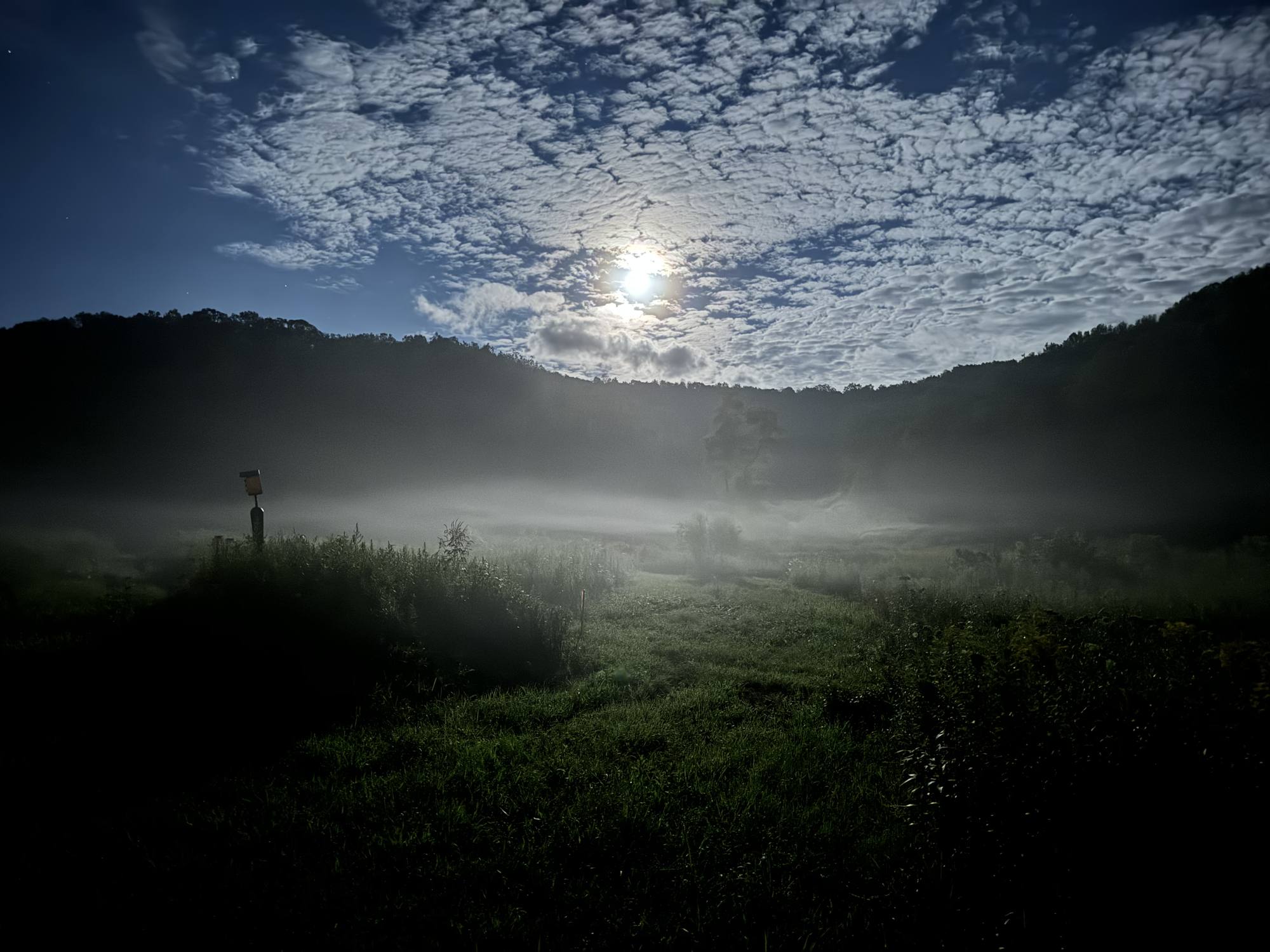
Segment 10 crosses a Class I trout stream, sensitive sedge meadow, remnant prairie and oak savanna, habitat of a State Threatened species, homes and working farms.
Source: Wis. Stat. § 196.491.
The filing rules require MGS to disclose what is here
The PSC and DNR filing requirements for transmission projects name the features found in Bear Valley:
- Trout streams and other high-value waterways (AFR § 8.1.2)
- Sensitive wetlands, including southern sedge meadow (AFR § 8.2.4)
- Endangered, threatened and special concern species (AFR § 9)
- The Driftless Area, as a special or unique natural feature (AFR § 1.6.4)
- Homes, farm buildings and animal operations near the line (AFR § 1.10)
- How the state siting priorities were considered (AFR § 5.1.3)
Segment 10 triggers nearly every category on this list.
Source: PSC/DNR filing requirements for transmission lines (Sept. 2025).
The neighboring segment shows corridor reuse is possible
MariBell, the 765-kV line planned to end at Bell Center where BECI begins, is proposed by Dairyland Power Cooperative and GridLiance Heartland as a double-circuit line that uses existing rights-of-way wherever possible. On the same backbone, MGS has proposed no reuse of existing corridors.
Source: MariBell Transmission Project.
Sources
- Wis. Stat. § 1.12, state energy and siting priorities
- Wis. Stat. § 196.491, certificates for high-voltage lines
- Wis. Admin. Code § PSC 111.55, application contents
- PSC/DNR Application Filing Requirements, Transmission Lines (Sept. 2025)
- MISO, BECI Competitive Transmission Project Selection Report (Jan. 6, 2026)
- Midcontinent Grid Solutions, BECI project site
- SWNews4U, “Citizens continue to fight transmission line” (Aug. 2026)
- No 765 Line, BECI route data (Aug. 2026)
- MariBell Transmission Project